Safety and product certification
Is modular design safe?
“It Can’t Possibly Handle Heavy E-Bikes!”
We’ve heard this comment more times than we can count.Developing the TMK FLY’s advanced foldable and disassemblable design took nearly six years of careful engineering.
The carrier had to pass rigorous DEKRA certification testing and has earned full E8 homologation — which means it is officially approved for use and sale across the entire European Union.
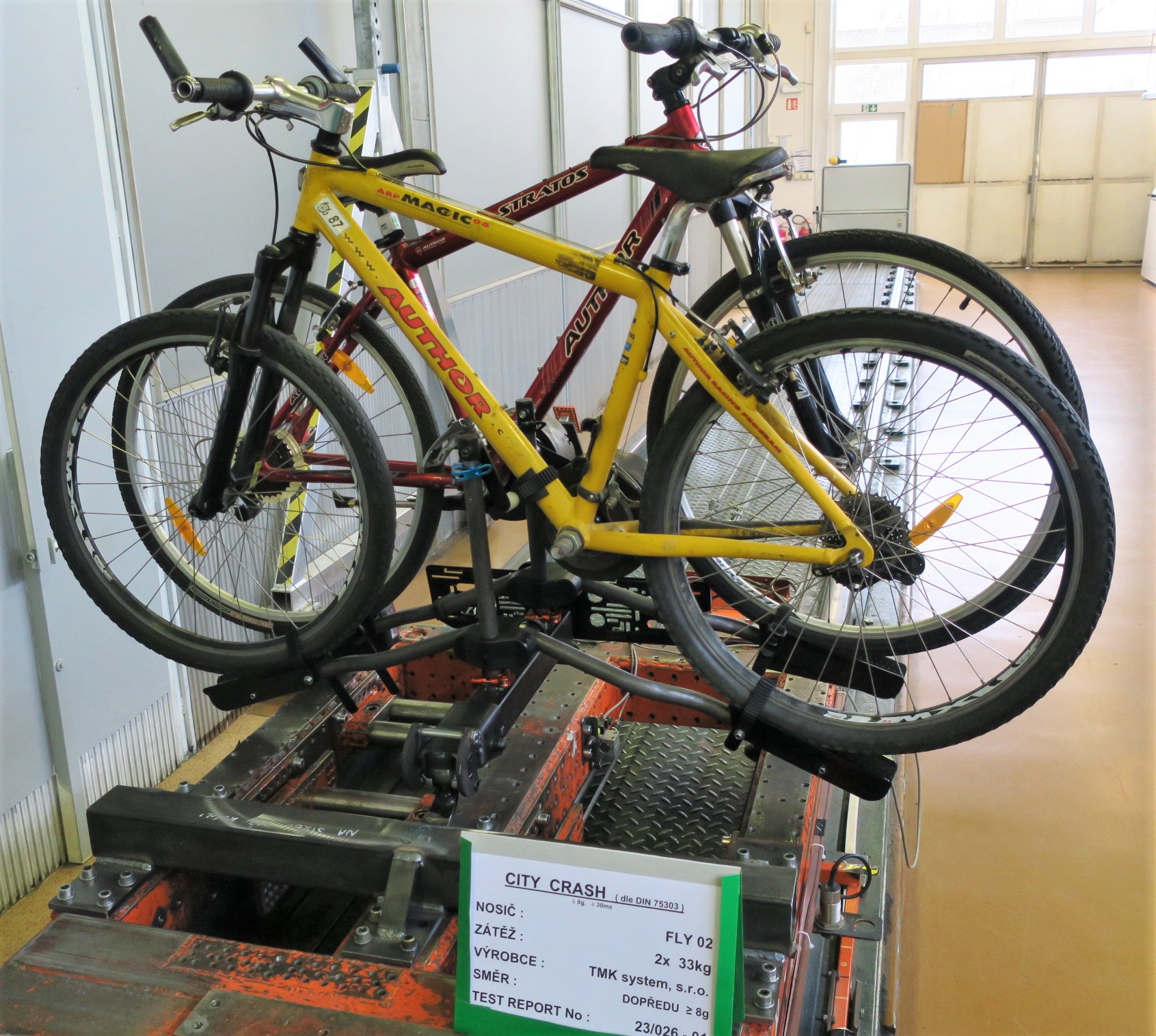
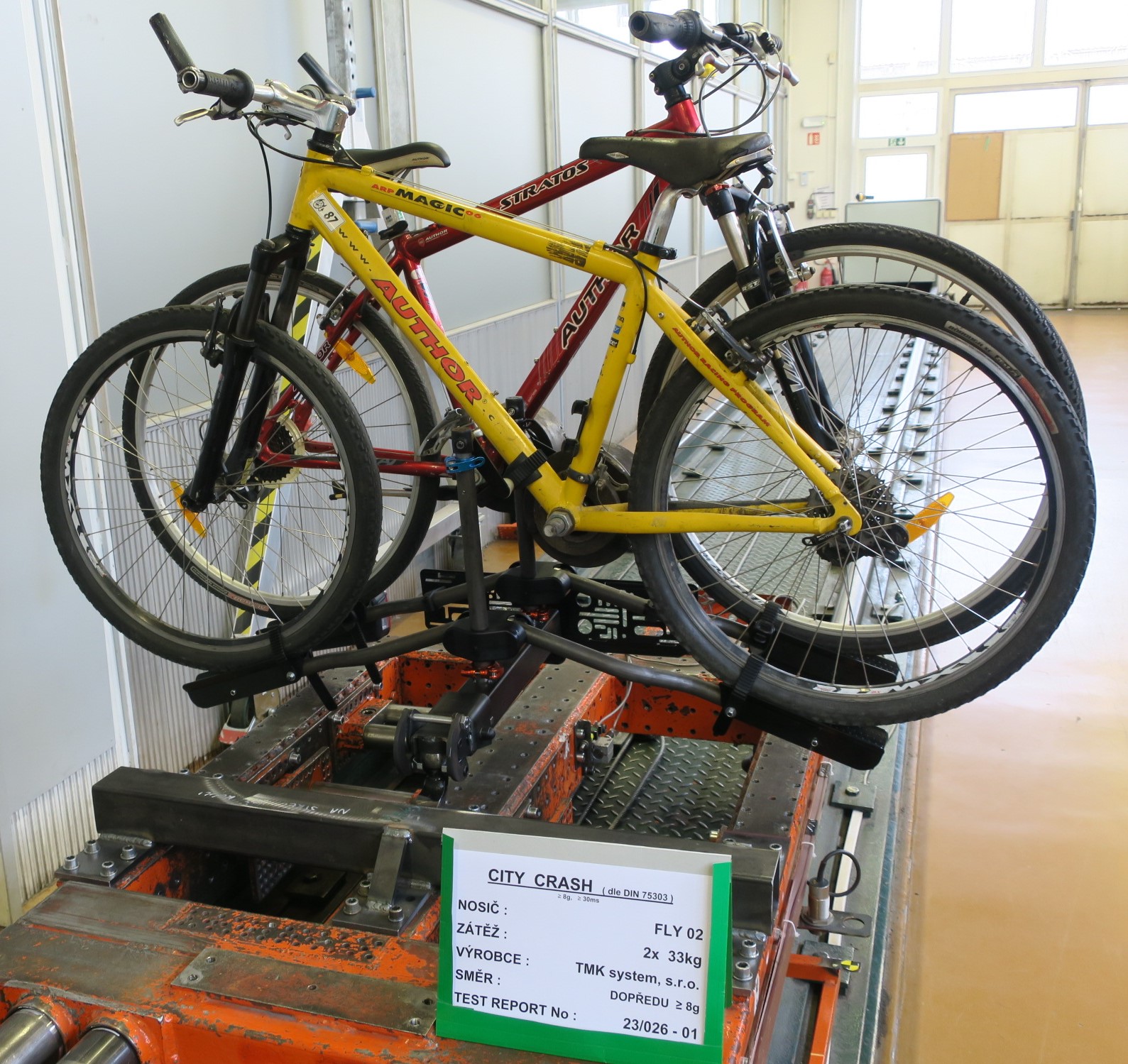
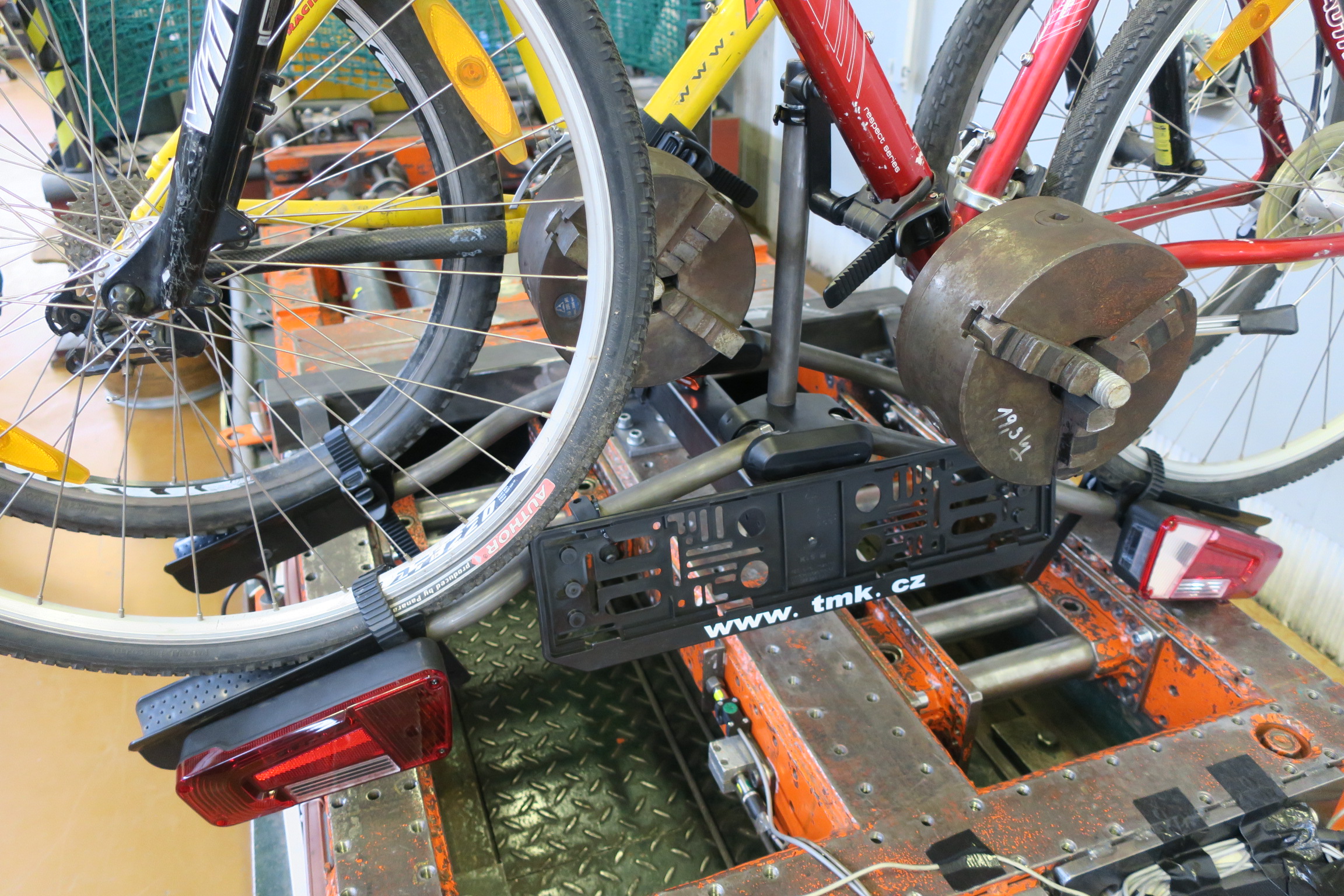
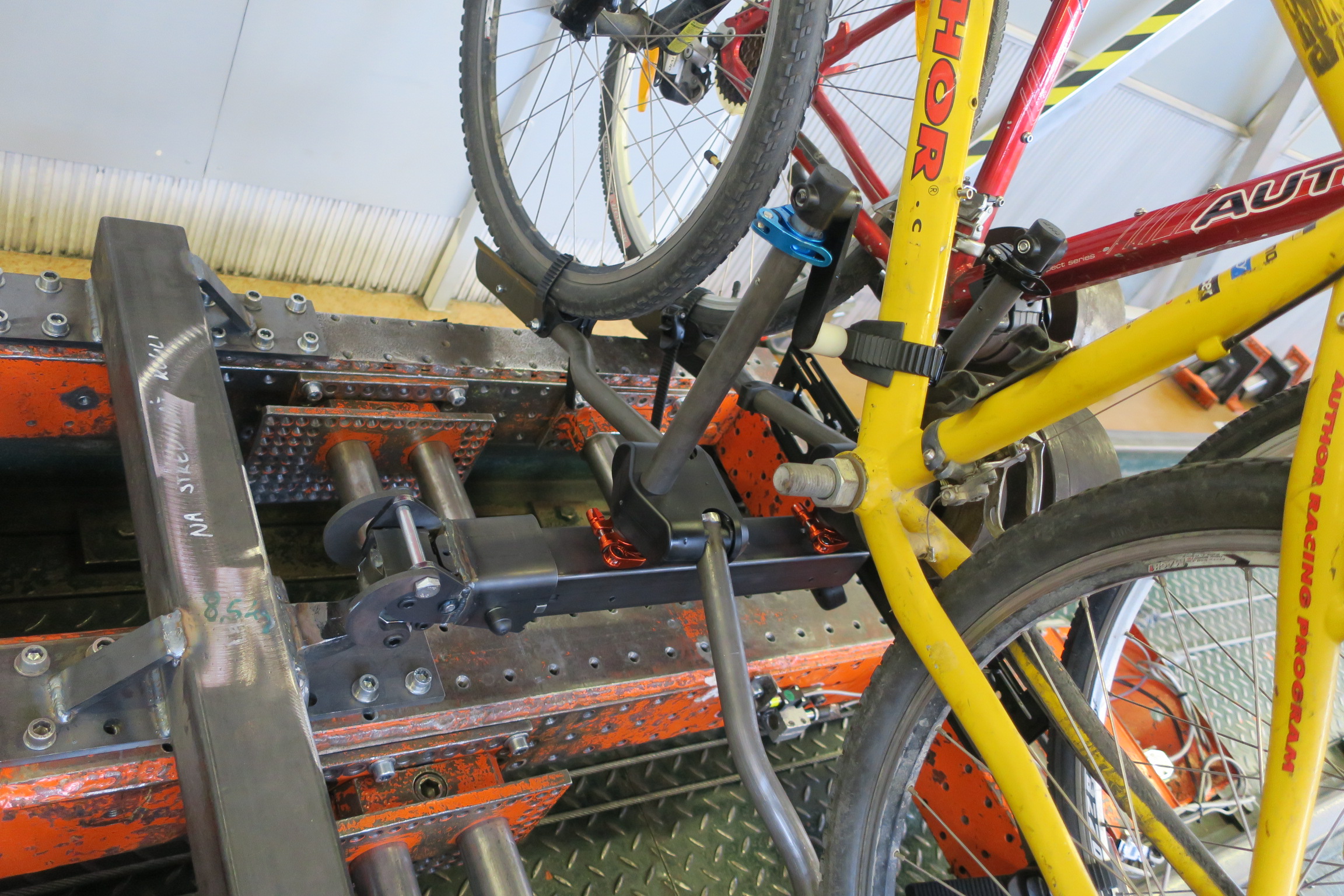
At the request of our Italian distributor, we even carried out additional static load testing and a full City-crash test at the DEKRA facility. He bet that the structure wouldn’t survive the crash test. He lost the bet.
We also test the carriers ourselves under real-world conditions on a regular basis. We load them with the full 60 kg and drive thousands of kilometres — 90 km/h on local roads and 130 km/h on motorways — using testing methods based on the same high standards as Škoda Auto.
The TMK FLY is built exceptionally strong using premium grades of steel, with every part manufactured in the Czech Republic. This gives us complete control over quality and allows us to guarantee outstanding durability.
The TMK FLY tow hitch bike carrier is safe, fully certified, and thoroughly tested for carrying up to 60 kg.
As long as you don’t overload it and follow the simple usage guidelines, you can enjoy every trip with complete peace of mind.

E8, City-crash test

ISO 9001:2015
DIN 75303:2019 testing parameters

Static test in axis X (forward)
1500N
Static test in axis Y (side)
1398N
Static test in axis Z (up)
1472N
Bike carrier load for City-crash test
66kg
Start; end speed
18km; 0km
What Were the Exact Testing Conditions?
Testování proběhlo podle normy vyvinuté pro automobilové výrobce Německým normovacím institutem (Deutsches Institut für Normung)
Static testing: A lifting force is gradually and smoothly applied until the required nominal value is reached. This force is then held constant for a full 60 seconds.
City-crash test: The sled speed immediately before the test load is applied is 16 ± 2 km/h. The final speed after impact is 0 km/h.
20 milimeters
During static testing, any permanent shift must not exceed 20 mm. In other words, when a sideways pulling force of approximately 140 kg is applied, the carrier is not allowed to move permanently on the tow ball by more than 2 cm.
10 grams
In the crash test, no component heavier than 10 grams is permitted to detach from the carrier. Practically speaking, nothing at all should come loose.